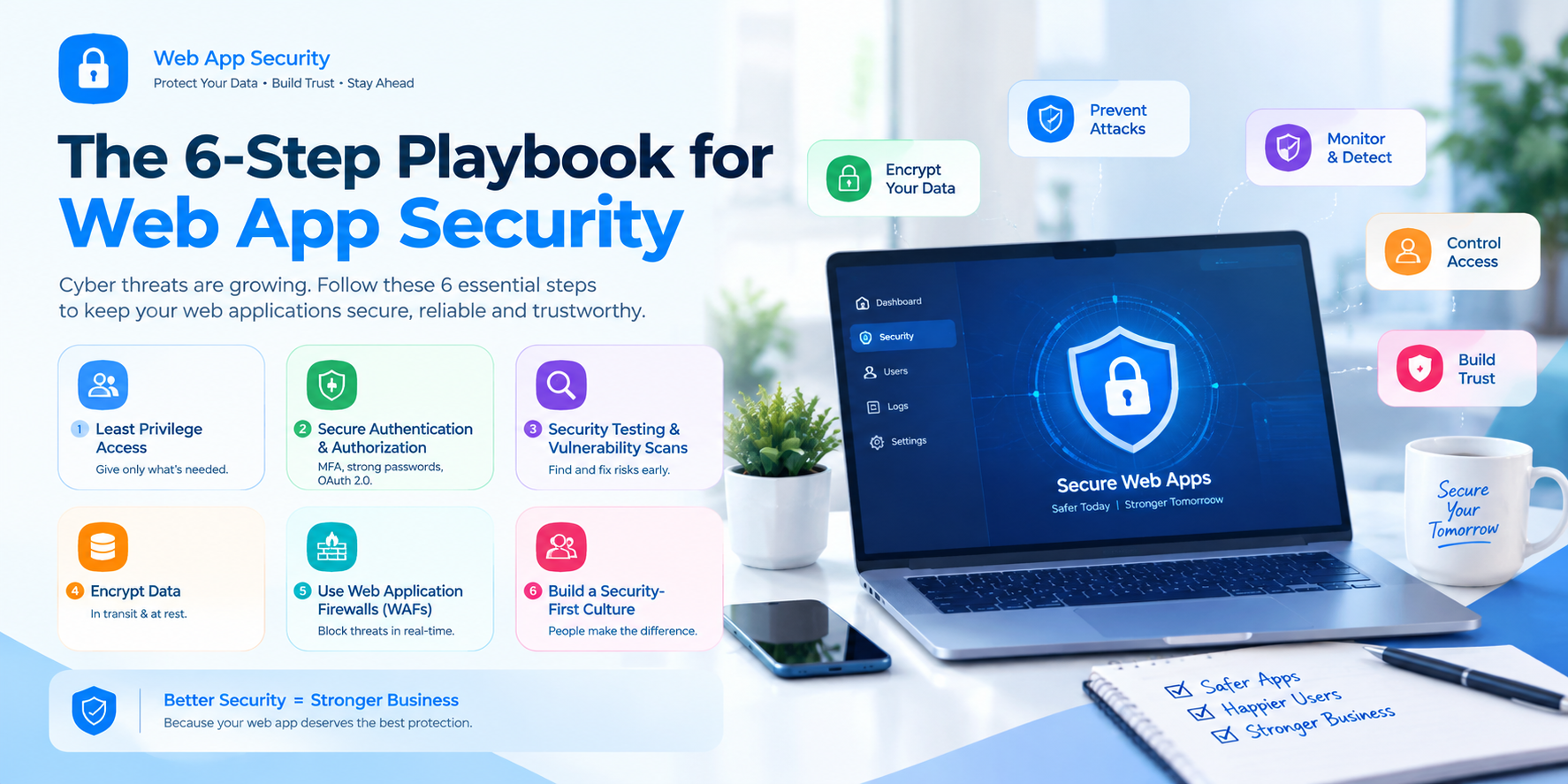
The Web App Security Playbook: 6 Practices Every Business Should Follow
Amartable Team
5 min read · Aug 31, 2025
The Web App Security Playbook: 6 Practices Every Business Should Follow article image

Introduction

Web apps are the backbone of corporate operations in today's digital-first economy. Web apps are essential to businesses' ability to handle data and provide services, from e-commerce platforms to SaaS plans. However, this dependence raises the possibility of cyberattacks. In addition to compromising private data, inadequate web app security undermines consumer confidence and harms a brand's reputation.

To guarantee that their applications stay safe, reliable, and trustworthy, this playbook lists six essential steps that any company, regardless of size, should follow.


1. Embrace the Principle of Least Privilege

One of the most overlooked yet powerful security measures is the principle of least privilege (PoLP). This concept means giving users and applications only the permissions they need to perform their tasks—nothing more.

  1. Limit access rights for employees, contractors, and apps.
  2. Regularly audit user roles and permissions.
  3. Implement role-based access control (RBAC) to minimize exposure.

Why it matters: Restricting unnecessary access significantly reduces the attack surface for potential breaches.


2. Secure Authentication and Authorization

Authentication is the frontline defense for Web App Security. Weak login mechanisms make it easy for attackers to infiltrate systems.

Best practices include:

  1. Enforcing multi-factor authentication (MFA) for all users.
  2. Using strong password policies with regular updates.
  3. Implementing OAuth 2.0 and OpenID Connect for secure session handling.

Pro Tip: Always monitor for unusual login patterns, as these may indicate a brute force or credential-stuffing attack.


3. Regular Security Testing and Vulnerability Scans

Web applications are dynamic, with frequent updates and integrations. Each update could unintentionally introduce vulnerabilities.

Key steps to follow:

  1. Conduct penetration testing at least quarterly.
  2. Use automated vulnerability scanners for continuous monitoring.
  3. Patch and update frameworks, plugins, and dependencies regularly.

Common Web App Vulnerabilities & Mitigation

VulnerabilityRisk LevelPrevention Strategy
SQL InjectionHighUse parameterized queries & ORM tools
Cross-Site Scripting (XSS)HighInput validation & output encoding
CSRF AttacksMediumCSRF tokens & same-site cookies
Broken AuthenticationHighMFA, session timeout, secure cookie flags
Insecure APIsHighStrong authentication, API gateways


4. Encrypt Data in Transit and at Rest

Encryption ensures that even if data is intercepted, it remains unreadable to unauthorized parties.

  1. Use TLS/SSL certificates for all web traffic.
  2. Encrypt sensitive data (customer details, financial information) at the database level.
  3. Store keys securely with Hardware Security Modules (HSMs) or cloud key management services.

Why encryption matters: It’s not just about compliance (GDPR, HIPAA, PCI-DSS), but also about safeguarding customer trust.


5. Implement Web Application Firewalls (WAFs)

A Web Application Firewall is a shield between your app and the internet. It filters malicious traffic while allowing legitimate requests.

Benefits of WAFs:

  1. Blocks SQL injections and XSS attacks in real-time.
  2. Detects and mitigates Distributed Denial of Service (DDoS) attempts.
  3. Provides detailed traffic logs for forensic analysis.

Pro Tip: Opt for a cloud-based WAF for scalability and reduced latency.


6. Foster a Security-First Culture

Technology alone isn’t enough. Human error remains one of the biggest causes of security breaches.

Steps to build a security-first culture:

  1. Conduct regular security awareness training.
  2. Encourage employees to report phishing attempts.
  3. Establish clear incident response protocols.
  4. Promote a shared responsibility mindset across teams.

Why it matters: A strong culture of security reduces risks and ensures rapid response in case of an incident.


FAQs About Web App Security

Q1. Why is Web App Security important for small businesses?

Ans: Even small businesses are targets because attackers often see them as "low-hanging fruit" with weaker defenses. Web App Security protects customer data and ensures business continuity.

Q2. How often should I conduct security testing?

Ans: At minimum, quarterly. However, continuous monitoring with automated tools is recommended for real-time protection.

Q3. Are cloud-based apps more secure than on-premise apps?

Ans: Not inherently. Security depends on proper configurations, access controls, and vendor practices. Shared responsibility is key.

Q4. What’s the first step if my web app is breached?

Ans: Immediately isolate the affected systems, notify stakeholders, analyze logs, and implement incident response protocols. Follow with a forensic investigation.


Conclusion

The digital landscape is evolving rapidly, and cyber threats are keeping pace. Businesses that fail to invest in Web App Security not only risk losing data but also customer trust and long-term revenue. By following this six-step playbook—covering least privilege, authentication, testing, encryption, WAFs, and security culture—you build a strong defense against modern cyber risks.


For further insights, explore resources from OWASP, a trusted authority in application security.

Stay Updated

Get the latest engineering posts delivered right to your inbox.

More from Amartable

Thumbnail for Attendance Management System for Modern Institutions

Attendance Management System for Modern Institutions

In today’s fast-paced digital world, managing attendance manually is no longer efficient. Schools, colleges, and training centers are rapidly shifting toward smarter solutions—and that’s where an attendance management system becomes essential.What is an Attendance Management System?An attendance management system is a digital solution that helps institutions track, manage, and analyze student or employee attendance automatically. Instead of using paper registers or spreadsheets, everything is stored, updated, and accessed in real-time.Why Traditional Attendance Methods FailManual attendance tracking may seem simple, but it comes with several challenges:Human errors in marking attendanceTime-consuming record maintenanceDifficulty in generating reportsLack of transparency for parents and managementAs institutions grow, these problems multiply—leading to inefficiency and mismanagement.Key Benefits of an Attendance Management System1. Saves Time and EffortAutomating attendance reduces administrative workload. Teachers can mark attendance in seconds, and reports are generated instantly.2. Real-Time TrackingAdmins and parents can monitor attendance in real time, ensuring better accountability and communication.3. Accurate and Reliable DataWith automation, errors are minimized. Every record is stored securely and can be accessed anytime.4. Smart Reports & InsightsGet detailed attendance reports, trends, and analytics to make informed decisions.5. Seamless IntegrationModern systems integrate with other modules like fee management, exams, and communication tools.Why Choose Amartable?At Amartable, we provide a powerful and user-friendly attendance management system as part of our Student Management System. Built with real user feedback since 2019, our solution is designed for institutions in Bangladesh and beyond.With Amartable, you get:Easy-to-use interface for teachers and adminsReal-time attendance trackingAutomated reports and analyticsIntegrated communication with parentsAn attendance management system is no longer a luxury—it’s a necessity. It not only saves time but also improves accuracy, transparency, and overall institutional efficiency.If you're still relying on manual methods, now is the perfect time to upgrade.

Mar 17, 2026 · 5 min read
Thumbnail for কেন প্রতিটি শিক্ষা প্রতিষ্ঠানের একটি প্রফেশনাল ওয়েবসাইট থাকা জরুরি

কেন প্রতিটি শিক্ষা প্রতিষ্ঠানের একটি প্রফেশনাল ওয়েবসাইট থাকা জরুরি

বর্তমান সময়ে শিক্ষা প্রতিষ্ঠান পরিচালনা শুধু ক্লাস নেওয়া বা পরীক্ষা নেওয়ার মধ্যেই সীমাবদ্ধ নয়। এখন প্রতিযোগিতা অনেক বেড়েছে। অভিভাবকরা আগে খোঁজ নেন, তুলনা করেন, তারপর সিদ্ধান্ত নেন।আজকের বাংলাদেশে যদি কোনো স্কুল, কলেজ, কোচিং সেন্টার বা মাদ্রাসার নিজস্ব ওয়েবসাইট না থাকে, তাহলে সেই প্রতিষ্ঠান অনেক সম্ভাব্য শিক্ষার্থী হারাচ্ছে।একটি প্রফেশনাল ওয়েবসাইট এখন আর বিলাসিতা নয়—এটি প্রয়োজন।১. প্রথম ইমপ্রেশনই সবচেয়ে গুরুত্বপূর্ণঅভিভাবকরা এখন কী করেন?গুগলে সার্চ করেন:“ঢাকার ভালো স্কুল”“২০২৬ সালের স্কুল ভর্তি”“এইচএসসি কোচিং সেন্টার ঢাকায়”“ইংলিশ মিডিয়াম স্কুল অ্যাডমিশন”যদি আপনার প্রতিষ্ঠানের ওয়েবসাইট না থাকে, তাহলে আপনি এই তালিকা থেকেই বাদ পড়ে যাচ্ছেন।একটি প্রফেশনাল ওয়েবসাইটে থাকতে পারে:প্রতিষ্ঠানের পরিচিতিশিক্ষক-শিক্ষিকাদের তথ্যঅবকাঠামোর ছবিফলাফল ও সাফল্যভর্তি সংক্রান্ত তথ্যএগুলো অভিভাবকদের মনে আস্থা তৈরি করে।২. ওয়েবসাইট ভর্তি বাড়াতে সাহায্য করেএকটি ওয়েবসাইট ২৪ ঘণ্টা আপনার হয়ে কাজ করে।অফিস বন্ধ থাকলেও:অভিভাবক ভর্তি তথ্য দেখতে পারেনঅনলাইনে ফর্ম পূরণ করতে পারেনফোন নম্বর ও ঠিকানা পেতে পারেনকোর্স সম্পর্কে বিস্তারিত জানতে পারেনওয়েবসাইট কীভাবে ভর্তি বাড়ায়:অনলাইন অ্যাডমিশন ফর্মইনকোয়ারি ফর্মহোয়াটসঅ্যাপ বাটনপরিষ্কার ফি কাঠামোকোর্সের বিস্তারিত বিবরণফোনে একই প্রশ্নের উত্তর বারবার দেওয়ার প্রয়োজন কমে যায়।৩. শুধু ফেসবুক পেজ যথেষ্ট নয়অনেক প্রতিষ্ঠান শুধু ফেসবুক পেজ দিয়ে চলছে।কিন্তু সমস্যা হলো:সব পোস্ট সবাই দেখে নাফেসবুক অ্যালগরিদম আপনার নিয়ন্ত্রণে নয়পেজ হ্যাক হওয়ার ঝুঁকি থাকেপ্রতিষ্ঠানের ভাবমূর্তি সবসময় প্রফেশনাল দেখায় নাকিন্তু ওয়েবসাইট হলো আপনার নিজের সম্পত্তি।এখানে আপনি সম্পূর্ণ নিয়ন্ত্রণে থাকেন।ওয়েবসাইট আপনার প্রতিষ্ঠানকে আরও গুছানো, দায়িত্বশীল ও আধুনিক হিসেবে তুলে ধরে।৪. অভিভাবক ও শিক্ষার্থীদের সাথে সহজ যোগাযোগবর্তমান সময়ে অভিভাবকরা ডিজিটাল যোগাযোগ পছন্দ করেন।একটি ভালো শিক্ষা প্রতিষ্ঠানের ওয়েবসাইটে থাকতে পারে:নোটিশ বোর্ডএকাডেমিক ক্যালেন্ডারপরীক্ষার ফলাফলইভেন্ট গ্যালারিডাউনলোড সেকশনযদি ওয়েবসাইটের সাথে স্টুডেন্ট ম্যানেজমেন্ট সিস্টেম যুক্ত থাকে, তাহলে আরও সুবিধা পাওয়া যায়:উপস্থিতি দেখাপরীক্ষার ফলাফল দেখাফি স্ট্যাটাস দেখাগুরুত্বপূর্ণ ঘোষণা পাওয়াএতে প্রশাসনিক চাপ কমে এবং অভিভাবকদের সন্তুষ্টি বাড়ে।সংক্ষেপে: কেন শিক্ষা প্রতিষ্ঠানের ওয়েবসাইট প্রয়োজন? ভর্তি বৃদ্ধি করেপ্রতিষ্ঠানের বিশ্বাসযোগ্যতা বাড়ায়গুগলে খুঁজে পাওয়া যায়২৪/৭ তথ্য প্রদান করেপ্রশাসনিক কাজ সহজ করেঅভিভাবকদের সাথে যোগাযোগ উন্নত করে৫. গুগলে দেখা যাওয়ার সুযোগ (SEO সুবিধা)বাংলাদেশে এখন প্রায় সবাই গুগল ব্যবহার করে।যদি কেউ সার্চ করে:“ঢাকায় ভালো স্কুল”“কোচিং সেন্টার ভর্তি ২০২৬”“স্কুল ওয়েবসাইট বাংলাদেশ”তাহলে ওয়েবসাইট থাকলে আপনার প্রতিষ্ঠান সার্চ রেজাল্টে আসতে পারে।ওয়েবসাইট না থাকলে, এই সুযোগ সম্পূর্ণভাবে হারিয়ে যায়।৬. প্রতিযোগিতায় এগিয়ে থাকার উপায়আজকাল অনেক স্কুল ও কোচিং সেন্টার ওয়েবসাইট করছে।যদি আপনার প্রতিষ্ঠান না করে, তাহলে অভিভাবকরা ভাবতে পারেন:প্রতিষ্ঠানটি কি আধুনিক?তারা কি প্রযুক্তি ব্যবহার করে?তারা কি সংগঠিত?দুইটি প্রতিষ্ঠানের শিক্ষা মান প্রায় একই হলে, অভিভাবক সাধারণত সেই প্রতিষ্ঠান বেছে নেন যেটি অনলাইনে গুছানোভাবে উপস্থাপিত।একটি শিক্ষা প্রতিষ্ঠানের ওয়েবসাইটে কী কী থাকা উচিত?হোম পেজ (প্রধান তথ্য)আমাদের সম্পর্কেকোর্স / ক্লাস তথ্যভর্তি নির্দেশনাযোগাযোগ পেজছবি গ্যালারিনোটিশ সেকশনঅতিরিক্ত সুবিধা:অনলাইন ভর্তিঅনলাইন পেমেন্টফলাফল প্রকাশঅভিভাবক লগইনওয়েবসাইট খরচ না বিনিয়োগ?অনেকে মনে করেন ওয়েবসাইট তৈরি করা ব্যয়বহুল।কিন্তু চিন্তা করুন—যদি ওয়েবসাইটের মাধ্যমে বছরে মাত্র ১০ জন অতিরিক্ত শিক্ষার্থী ভর্তি হয়, তাহলে সেই আয় কি ওয়েবসাইটের খরচের চেয়ে বেশি নয়?ওয়েবসাইট একবার তৈরি করলে বহু বছর ব্যবহার করা যায়।এটি দীর্ঘমেয়াদী বিনিয়োগ।আপনার প্রতিষ্ঠানের জন্য একটি প্রফেশনাল ওয়েবসাইট তৈরি করতে আমাদের সাথে যোগাযোগ করুনভবিষ্যতের শিক্ষা ব্যবস্থা ডিজিটালডিজিটাল বাংলাদেশ বাস্তবতা।অভিভাবকরা চান:দ্রুত তথ্যঅনলাইন যোগাযোগস্বচ্ছতানিরাপদ ডেটা সংরক্ষণযে প্রতিষ্ঠান এখনই ডিজিটাল পদক্ষেপ নেবে, তারা ভবিষ্যতে এগিয়ে থাকবে।উপসংহারবাংলাদেশের প্রতিটি শিক্ষা প্রতিষ্ঠানের এখন একটি প্রফেশনাল ওয়েবসাইট থাকা অত্যন্ত জরুরি।এটি শুধু অনলাইন উপস্থিতি নয়—এটি প্রতিষ্ঠানের বিশ্বাসযোগ্যতা, আধুনিকতা এবং উন্নয়নের প্রতীক।ভর্তি বৃদ্ধি, প্রশাসনিক কাজ সহজ করা এবং অভিভাবকদের সাথে ভালো সম্পর্ক গড়ার জন্য একটি ওয়েবসাইট অত্যন্ত কার্যকর ভূমিকা রাখে।এখন সময় ডিজিটাল রূপান্তরের।প্রায়শই জিজ্ঞাসিত প্রশ্ন (FAQ)১. একটি শিক্ষা প্রতিষ্ঠানের জন্য ওয়েবসাইট কেন প্রয়োজন?একটি প্রফেশনাল ওয়েবসাইট প্রতিষ্ঠানকে অনলাইনে দৃশ্যমান করে, ভর্তি বৃদ্ধি করে এবং অভিভাবকদের মধ্যে আস্থা তৈরি করে।২. ছোট স্কুল বা কোচিং সেন্টারের কি ওয়েবসাইট দরকার?হ্যাঁ, ছোট প্রতিষ্ঠানগুলোর জন্যও ওয়েবসাইট গুরুত্বপূর্ণ, কারণ এটি তাদেরকে আরও প্রফেশনালভাবে উপস্থাপন করে এবং নতুন শিক্ষার্থী পেতে সাহায্য করে।৩. ওয়েবসাইট কি ভর্তি বাড়াতে সাহায্য করে?হ্যাঁ, অনলাইন তথ্য, অ্যাডমিশন ফর্ম এবং সহজ যোগাযোগের মাধ্যমে ওয়েবসাইট ভর্তি বৃদ্ধিতে গুরুত্বপূর্ণ ভূমিকা রাখে।৪. ফেসবুক পেজ থাকলে কি ওয়েবসাইট দরকার?হ্যাঁ, ফেসবুক পেজের পাশাপাশি ওয়েবসাইট থাকলে প্রতিষ্ঠান আরও নির্ভরযোগ্য ও গুছানোভাবে উপস্থাপিত হয়।👉 আরও জানুন: কাস্টম ওয়েবসাইট বনাম ওয়েবসাইট বিল্ডার

Mar 17, 2026 · 5 min read
Thumbnail for Custom Web Development vs Website Builders – Which Is Better?

Custom Web Development vs Website Builders – Which Is Better?

In 2026, every serious business needs a strong online presence. But when it comes to building a website, most business owners face one major question:Should I use a website builder like WordPress, Wix, or Shopify — or invest in custom web development?The answer depends on your long-term goals, scalability needs, performance expectations, and brand positioning.In this guide, we will break down the differences between custom web development and website builders, so you can make the right decision for your business.What Is Custom Web Development?Custom web development means building a website from scratch using programming languages such as:HTML5CSS3JavaScriptReact / Next.jsPHP / LaravelNode.jsCustom backend architectureInstead of using pre-built templates, developers create:Unique UI/UX designCustom database structureOptimized codebaseScalable backend systemsAdvanced functionalityCustom websites are built specifically for your business model, target audience, and operational workflow.What Are Website Builders?Website builders are platforms that allow users to create websites using drag-and-drop tools. Popular examples include:WordPress (with themes)WixShopifySquarespaceThey offer:Pre-designed templatesPlugin-based functionalityQuick setupLower initial costThey are suitable for simple websites with standard needs.Key Differences: Custom Website vs Website Builder1. Performance & SpeedCustom-built websites are optimized for:Fast loading speedClean code structureMinimal unnecessary scriptsBetter Core Web VitalsCustom-built websites are optimized for performance metrics aligned with Google’s Core Web Vitals guidelines, which directly impact search rankings and user experience.Website builders often include:Heavy themesMultiple unused pluginsShared hosting limitationsPage speed directly impacts:SEO rankingsConversion rateUser experienceGoogle prioritizes fast, optimized websites in search results.2. SEO & Search Engine OptimizationCustom web development gives full control over:Technical SEOSchema markupURL structureClean HTMLServer configurationStructured dataWebsite builders limit:Backend optimizationAdvanced SEO customizationCode-level improvementsIf your goal is long-term organic traffic and ranking on Google, custom development provides stronger SEO flexibility.3. Scalability & Future GrowthThis is where many businesses make mistakes.A small eCommerce store today may grow into:Multi-vendor marketplaceInternational shipping platformAdvanced inventory systemERP integrationCustom payment gatewayCustom web applications are built to scale.Website builders may struggle with:High trafficComplex workflowsCustom integrationsAdvanced security needsScalability is critical for serious businesses.4. Security & Data ProtectionCustom websites offer:Custom authentication systemsSecure API integrationAdvanced encryptionReduced plugin vulnerabilitiesWebsite builders rely heavily on:Third-party pluginsShared infrastructurePublicly known template structuresFor eCommerce businesses handling payment data, security is non-negotiable.5. Branding & Unique IdentityTemplates limit creativity.Thousands of businesses may use the same theme.Custom web design ensures:Unique visual identityBrand-focused UI/UXTailored user journeyConversion-focused layoutYour website should look like your brand — not like a template.When Should You Choose a Website Builder?A website builder may be suitable if:You need a simple portfolio siteBudget is extremely limitedYou don’t require advanced functionalityYou need a quick temporary solutionIt works for freelancers, early startups, or MVP validation.When Should You Choose Custom Web Development?Custom web development is ideal if:You run a growing eCommerce businessYou need custom featuresYou require high securityYou plan long-term scalingYou want strong SEO performanceYou want complete ownership and controlFor serious brands, custom development is a strategic investment.Cost Comparison: Short-Term vs Long-TermWebsite builders appear cheaper initially.But consider:Monthly subscription feesPlugin costsTransaction feesPerformance limitationsRedesign costs laterCustom web development has:Higher initial investmentLower long-term dependencyBetter ROI over timeThink long-term, not just launch cost.AI, Automation & Modern Web ArchitectureIn 2026, modern websites integrate:AI chatbotsAutomated workflowsCRM systemsMarketing automationCustom dashboardsAPI integrationsCustom web applications allow seamless integration with:Payment gatewaysLogistics systemsInventory managementAnalytics platformsWebsite builders often restrict deep automation capabilities.Quick Summary: Custom vs BuilderChoose Website Builder If:You need a basic siteBudget is very limitedNo custom features requiredChoose Custom Development If:You want long-term growthSEO matters seriouslyYou need unique brandingYou require advanced featuresSecurity is criticalFinal VerdictThere is no universal answer.But there is a strategic answer.If your website is just an online brochure, a builder may work.If your website is a core business asset — generating leads, processing payments, managing customers — then custom web development is the smarter choice.Your website is not an expense.It is digital infrastructure.In 2026, businesses that invest in scalable, optimized, secure, and conversion-focused web solutions will dominate their industries.The real question is not:“Which is cheaper?”The real question is:“Which solution supports my business growth for the next 5–10 years?”Choose wisely.Ready to Build a Scalable Website?If your website is more than just an online brochure — if it’s meant to generate leads, process payments, or support business growth — then custom development is the smarter long-term investment.At Amartable, we build high-performance, SEO-optimized, scalable websites tailored to your business goals — whether it’s eCommerce, portfolio, corporate, or custom web applications.Let’s build a website that grows with your business.Contact us today for a free consultation.Frequently Asked Questions (FAQs)1. What is the main difference between custom web development and website builders?Custom web development provides complete control over design, performance, scalability, and technical SEO, while website builders rely on pre-built templates with limited flexibility.2. Is custom web development better for SEO?Yes. Custom-built websites allow structured data implementation, clean code architecture, optimized page speed, and advanced technical SEO configurations.3. When should a business choose a website builder?Website builders are suitable for startups or small businesses that need a simple website quickly with limited customization and lower initial investment.4. Is custom web development worth the cost in 2026?For businesses focused on long-term growth, brand authority, and conversion optimization, custom web development delivers stronger ROI and scalability.

Feb 27, 2026 · 5 min read